I remember sitting across from a landlord, palms sweating, about to pitch something most people said was impossible.
I didn't have the down payment for a single investment property. I didn't have perfect credit. I didn't have a real estate license or a trust fund or a wealthy mentor. What I had was a simple idea:
What if I could run a short-term rental business on properties I didn't own?
That question changed everything.
Today, I manage a portfolio of short-term rental units generating seven-figure revenues — without a single property on my balance sheet. The model is called rental arbitrage, and it's the most accessible path into the STR industry that most people have never heard of.
This guide is everything I wish someone had handed me before I started. No fluff, no theory — just the exact five-step framework I used to go from zero to a 7-figure STR operation without buying a single piece of real estate.
Wait — Isn't This Just Subletting?
That's the first thing most people ask, and it's fair. The short answer: no. The long answer: rental arbitrage is a legitimate, documented business model with dedicated lease structures, proper insurance products, and thousands of operators running it legally across the United States.
The difference between sketchy subletting and professional rental arbitrage is one thing: the landlord knows exactly what you're doing — and they agree to it in writing.
You're not sneaking Airbnb guests into a lease the landlord thinks is residential. You're negotiating a commercial arrangement where the landlord receives guaranteed, above-market rent every month in exchange for allowing you to operate short-term rentals in their unit. Both parties win. That's the foundation the whole model rests on.
The 5-Step STR Arbitrage Blueprint (Quick Rundown)
Here's the entire framework at a glance. Each step gets a full breakdown below.
Find Landlord-Friendly Markets — Identify cities where STR ordinances allow arbitrage and landlord demand exists.
Master the Arbitrage Conversation — Learn exactly how to pitch landlords so they say yes.
Design for Maximum Revenue — Set up your unit to command premium nightly rates.
Dominate the Airbnb Algorithm — Optimize your listing to appear at the top of search results.
Build Your Management Stack — Automate operations so you scale without burning out.
Each step builds on the last. Skip one and the whole system wobbles. Run all five and you have a machine.
Step 1: Find Landlord-Friendly Markets
Not every city is built for this. Before you approach a single landlord, you need to be in a market where the regulations allow STR operation and where landlord-friendly conditions exist. Showing up in the wrong city wastes months of effort.
What to Look For in a Market
STR-permissive local ordinances — Some cities ban non-owner-occupied STRs entirely. Research your target city's short-term rental laws before spending any time there.
High average daily rates (ADR) — You need nightly rates high enough to cover rent, utilities, furnishing costs, and platform fees with margin left over. Markets with ADRs under $120 are often too thin for arbitrage.
Strong occupancy year-round — Seasonal markets create cash flow risk. Look for markets with consistent demand drivers: universities, hospitals, corporate corridors, tourist destinations.
Landlord vacancy pain — In markets with high vacancy rates or slow leasing seasons, landlords are far more open to unconventional arrangements.
Common Mistake at This Stage
Beginners pick markets based on where they live, not where the numbers work. Your first arbitrage unit doesn't have to be in your backyard. Some of the most profitable operators run units in markets they've never visited — managed entirely remotely.
Your Quick Win
Pull up AirDNA or Mashvisor for any target market and look at the revenue potential for 1-bedroom and 2-bedroom units. If the estimated monthly revenue is 1.5x or more of the average market rent, you have a viable spread. That spread is your profit.
Step 2: Master the Arbitrage Conversation
This is where most people quit before they even start. They assume landlords will never say yes. The reality is that landlords have one problem you can solve completely: vacancy and payment risk.
Your pitch reframes their risk. You're not asking for permission to sublet — you're offering them a business arrangement that makes their life easier and their income more predictable.
The Core Value Proposition to a Landlord
Guaranteed rent on the 1st of every month — no late payments, ever
You handle all maintenance calls, cleaning, and property management
You carry dedicated STR liability insurance (at minimum $1M coverage) that protects them
You keep the unit occupied and well-maintained — reducing vacancy-related deterioration
How to Find Receptive Landlords
Don't start with big property management companies — their lawyers will shut it down. Target independent landlords managing 2–10 units. These owners often have pain points big landlords don't: a vacant unit sitting empty for 3 months, a bad tenant experience they're still recovering from, or a property in a secondary location that struggles to lease at market rate.
The best source: Zillow and Craigslist rental listings that have been sitting for 30+ days. A listing that's been up for a month is a landlord with a problem. You have the solution.
What to Say
Lead with their pain, not your opportunity. "I noticed this unit has been available for a while — I run a short-term rental management operation and I'm looking for long-term leases at guaranteed rent. I'd love to show you exactly how I protect the property and ensure you get paid on time every single month."
You'll get a lot of no's. Expect it. The operators who build large portfolios treat landlord outreach the same way salespeople treat cold calls — it's a numbers game and the yes at unit #12 is worth all the no's before it.
Step 3: Design for Maximum Revenue
Your nightly rate is determined before a single guest books. It's determined the moment someone clicks on your listing and their brain processes what they see in the first three seconds.
Most arbitrage operators treat furnishing as a cost to minimize. The top earners treat it as an investment that directly multiplies nightly rates. A professionally designed unit in the same building as a generic IKEA setup will command 30–50% higher rates — and have higher occupancy.
The Revenue-First Furnishing Framework
Identify your guest persona first — Business travelers want fast WiFi, a desk, and blackout curtains. Families want a Pack-n-Play and a fully stocked kitchen. Couples want ambiance. Design for one persona, not all of them.
Invest in photography before anything else — Professional photography typically adds $20–30/night to your average daily rate. At 20 nights of occupancy per month, that's $400–600 in additional monthly revenue from one photo session.
The 'hotel detail' rule — Guests compare your listing to hotels. Match hotel amenities: quality linens (at minimum 400 thread count), premium toiletries, a Nespresso machine, a smart TV with streaming services already set up. These are the details guests screenshot and put in five-star reviews.
Spend the most on the bed — Your guests sleep there. A mattress topper, hotel-quality pillows, and a duvet cover that looks good in photos are worth more than nearly any other purchase.
What This Costs
A professionally designed 1-bedroom unit can be fully furnished for $4,000–7,000. At a $50/night premium over a generic setup, you recover that investment in 80–140 nights — roughly 3–5 months of operation. From that point forward, the design investment is pure margin.
Step 4: Dominate the Airbnb Algorithm
Airbnb's algorithm is not random. It rewards listings that demonstrate consistent bookings, high response rates, and strong review velocity. Understanding this is the difference between a unit that books every week and one that sits empty.
The Three Levers That Matter
Launch pricing — Price 20–30% below your target rate for the first 30 days to generate initial bookings and reviews fast. Five reviews changes your ranking position dramatically. Don't be greedy in month one.
Response time — Airbnb algorithmically rewards listings where hosts respond within one hour. Use automated messaging tools like Hospitable or Guesty to ensure instant responses 24/7, even while you sleep.
Review velocity — Reviews beget reviews. The more you have, the more Airbnb shows your listing. Send a personal follow-up message to every guest 24 hours before checkout, thanking them and expressing that you'd love a review if they enjoyed their stay. This alone doubles your review rate.
Dynamic Pricing Is Not Optional
Manual pricing loses you money every single week. Tools like PriceLabs or Beyond Pricing analyze real-time market demand, local events, seasonal patterns, and competitor availability to adjust your nightly rate automatically. Most operators who add dynamic pricing see a 15–25% revenue increase in the first 60 days without adding a single new unit.
Step 5: Build Your Management Stack
The operators who burn out are the ones doing everything manually. The operators who scale to 10, 20, 50 units are the ones who built systems before they were overwhelmed.
The goal of your management stack is to remove you as the bottleneck. A guest should be able to book, check in, stay, and check out — with a five-star experience — without you lifting a finger.
The Core Stack for Scalable Operations
Property Management Software (PMS) — Hostaway, Guesty, or Lodgify. Your PMS syncs calendars across all platforms (Airbnb, VRBO, Booking.com), centralizes messaging, and manages housekeeping schedules. This is your operating system.
Smart Locks — Schlage Encode or August Smart Lock. No key handoffs, no lockout emergencies. Unique access codes for every guest, auto-expiring at checkout.
Automated Messaging — Pre-built message sequences for booking confirmation, arrival instructions, mid-stay check-in, and checkout reminders. These run automatically. You write them once.
Cleaning Team Protocol — Your cleaning team is your most important vendor. Build a checklist, a restocking protocol, and a photo verification step where they send a photo of the made bed before marking the unit ready. Consistency here is what protects your reviews.
Dynamic Pricing Tool — As mentioned above. Non-negotiable at scale.
The Scaling Playbook
Once unit #1 is running profitably — meaning it generates positive cash flow after rent, utilities, furnishing amortization, platform fees, and cleaning — you use that proof of concept to go back to landlords with a track record.
"I currently manage a unit three blocks from here. Here's what my occupancy rate looks like. Here's what I paid the landlord every month, on time, for the last six months. I'd like to do the same for your property." That conversation closes deals.
Why the Numbers Work
Let's run a real example. Say you lease a 2-bedroom apartment in a mid-tier STR market for $1,800/month.
Monthly rent: $1,800
Utilities (estimated): $200
Platform fees (3% Airbnb host fee): ~$90 on $3,000 revenue
Cleaning (per stay, 8 stays/month at $60): $480
Supplies/restocking: $100
Total monthly costs: approximately $2,670
At a $130 average daily rate with 70% occupancy (21 nights), your monthly revenue is $2,730. That's a thin margin.
But push ADR to $150 — which professional photography and design reliably achieves — and revenue becomes $3,150 on the same occupancy. That's $480/month profit on one unit before you've touched leverage, economies of scale, or peak pricing.
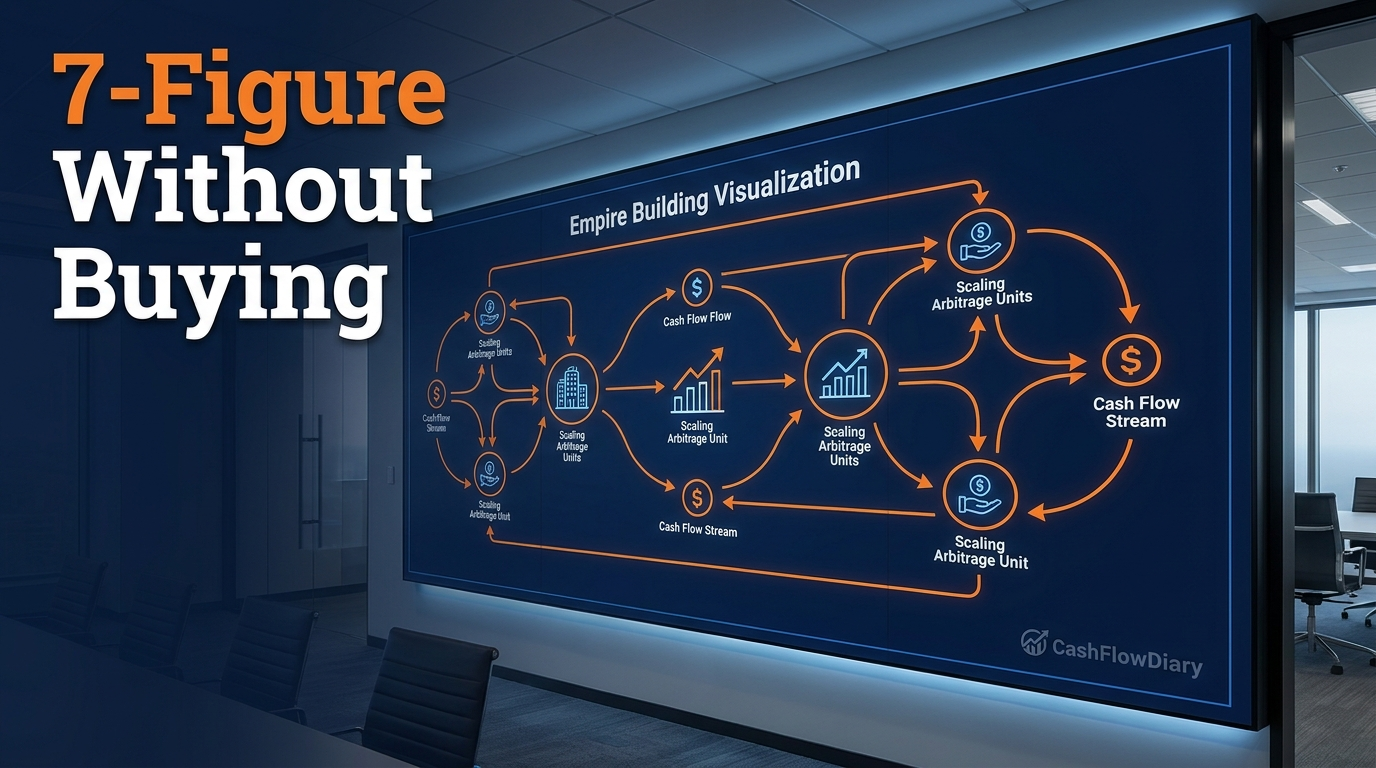
Scale to 10 units and that's $4,800/month from a portfolio you don't own. Scale to 50 units with a management team handling operations and you're looking at 7-figure annual revenues — which is exactly how this model earns its name.
Who This Model Is For (And Who It Isn't)
This model is a strong fit if:
You want to enter the STR industry without the capital required for property ownership
You're willing to do the upfront work of landlord negotiation and unit setup
You have strong communication and operations skills, or can build a team that does
You're playing a long game — the first unit is proof of concept, not the end goal
This model may not be for you if:
You want completely passive income with no management involvement
You're in a city with strict STR ordinances that prohibit non-owner operation
You're not comfortable with the variable nature of hospitality revenue
You want to build equity in real estate assets (arbitrage builds cash flow, not equity)
The Three Biggest Questions People Ask Before Starting
"What if occupancy drops and I can't cover rent?"
This is the risk that keeps most people from starting, and it deserves a straight answer. Yes, if your unit sits empty for a month, you're covering rent out of pocket. This is why you don't start with a unit you can't afford to carry for 30–60 days while you build your reviews and ranking.
The mitigation: start with a unit where your base rent is low relative to your local market. Target units where your break-even occupancy is 50% or below. That means even a bad month keeps you solvent.
"Is this legal in my city?"
The legality of rental arbitrage varies by market. Some cities explicitly permit it with a standard STR permit. Others prohibit non-owner-occupied STRs. Do your research before signing any lease. Resources like STR Cribs and VRBO's local regulations hub have city-by-city breakdowns. When in doubt, consult a local attorney for a 30-minute review of your lease and local ordinances.
"What if the landlord backs out later?"
This is why the arbitrage lease clause is non-negotiable. Your lease must explicitly state that short-term rental operation is permitted. If it's not in writing, it doesn't exist as a protection. Work with an attorney to draft a standard arbitrage addendum that you bring to every lease negotiation. Once it's signed, you have a contractual right to operate.
Frequently Asked Questions
What is rental arbitrage?
Rental arbitrage is the practice of leasing a property long-term and re-listing it on short-term rental platforms like Airbnb and VRBO at a higher nightly rate. The operator keeps the spread between what they earn from guests and what they pay in rent and operating costs.
How much money do you need to start rental arbitrage?
Most operators start with $5,000–$10,000 in startup capital. This covers: first and last month's rent and security deposit (if required), furnishing costs ($3,000–7,000 for a 1–2 bedroom unit), professional photography ($300–500), and a 1–2 month operating cushion.
How do you find landlords willing to allow Airbnb?
Focus on independent landlords managing small portfolios (2–10 units), particularly those with listings that have been on the market for 30+ days. Cold outreach via Zillow, Craigslist, and direct mail to small landlords in your target market is the most effective approach.
Can you do rental arbitrage without Airbnb?
Yes. Many operators list on VRBO, Booking.com, and their own direct booking website in addition to or instead of Airbnb. Diversifying across platforms reduces dependency on any single algorithm and often improves overall occupancy.
How many units does it take to replace a full-time income?
At an average of $500–800/month net profit per unit (after rent, fees, and cleaning), most operators replace a $60,000–80,000 annual salary with 8–12 well-managed units. The exact number depends on your market, average daily rate, and operating efficiency.
The First Step Is Simpler Than You Think
The thing that holds most people back from building a short-term rental business isn't capital, market access, or the right connections. It's the belief that you need to own the asset before you can operate the business.
Rental arbitrage dismantles that belief completely.
You don't need a mortgage. You don't need a down payment. You need a landlord willing to say yes, a unit that photographs well, and a system that delivers a consistent guest experience. Those three things you can build from scratch starting this week.
Start with one market. Research one landlord. Run one number. The entire framework above scales from that first unit — everything else is repetition with better margins.
If you're ready to go deeper, the CashFlow Diary community is where STR operators at every level share what's actually working — from their first arbitrage lease to their 50th unit. The resources, community, and accountability are there when you're ready to use them.